
How Life Works:
Everything begins with the way you choose to think. ~ Your thoughts are either good or bad but can’t be both at the same time and can’t be anything other than good or bad. ~ Your thoughts become actions and reactions. ~ Through repetition, your actions and actions become habits. ~ Your habits repeated frequently enough become ingrained as automatic actions and reactions called attitudes. ~ Your attitudes shape and define the “content” of your character. ~ Your character reveals your identity and influences the performances of the important roles you play in life and the quality of life you live each day.
They are all connected, all personal possessions, all within your control, all personal responsibilities and all choices.
This is how life works.
And everything begins with the way you “choose” to think.
Thoughts About Thinking
It is your thoughts that set off the chain of events which make life work: Thinking – Saying – Doing – Being. These are the functions of all human beings. What we choose to think, say and do defines who we become.
Thought is the process of thinking. It’s free will, a voluntary choice which is a gift from God. It’s cognitive, active and on-going. It never stops and hardly ever slows down. It is everything the conscious mind does. The conscious mind is your objective or thinking mind. It has no memory and can only hold one thought at a time.
Thoughts are used to:
- Recognize (what is that?).
- Remember (to bring an image or idea from the past into the mind).
- Reason (to use logic: if “this” – then “that”).
- Imagine (forming a mental image of something).
- Emote (creating energy and emotions; energy in motion).
- Decide (how to act and react, the last step before, actually saying things and doing stuff).
There are always lots of thoughts running through your head, so you must always be aware of what and how you are thinking and what those thoughts produce in words and deeds and which direction they take you.
There are only two choices you can make with a thought: 1) Act on it (say it, do it). 2) Dismiss it and move on to something else.
- Thoughts acted on produce actions and reactions; behavior. Actions are what you say and do. Reactions are what you say and do in response to someone or something.
- If you can’t control your thoughts, you can’t control what you say and how you say it and what you do and how you do it. Thoughts dismissed from your mind are forever gone until you choose to think them again.
- Good behavior is produced by good thoughts and good attitudes.
- Life Goal: Make good decisions and wise choices in everything you think, say and do.
We don’t truly reside in any neighborhood, city, state or country. In actuality, we live the space, that “6 inches of real estate between our ears.” The entirety of our experience resides there. Make it a nice place to live.
Josh Ellis (Success Magazine)
The Power of Good and Bad
The theme of The Attitude Rules is built around the words “good and bad.” We were created by good for good. But sin happened and the free will of all of us has fallen to occasional and perhaps ongoing bad choices. But the “good” news is that they are called choices for a reason. Free will.
Your thoughts, attitudes and actions are either good or bad, but they can’t be both at the same time and they can’t be anything other than good or bad.
Good means helpful, constructive, and productive. It’s morally excellent. It’s positive. It’s desirable in nature. In fact, good is the nature of God and “goodness” is one of the fruits of the Spirit. God is good and good just doesn’t get any better than that. In the world we live in there is a spiritual battle between good and bad (evil) all around us. Good produces good fruit and bad produces bad fruit. Good is the opposite of bad. Good is always good and bad is always bad. If it’s good, it’s not bad and if it’s bad, it’s not good. There are degrees of good and bad. But even the worst good is still good and the best bad is still bad.
Good and bad are two completely different things, going in two completely different directions and producing two completely different results. It’s either good or bad, this way or that way, one way or the other. There is no point located between good and bad. There are no “gray areas” to hide in and to deceive yourself with. There is just good or bad. You must choose a side and there are only two choices: Good or bad and whatever good and bad represent.
Although in everyone’s life there is a mixture of good and bad, the good must be maximized and the bad minimized. And even when you cannot directly choose your circumstances you can choose your good thoughts and attitudes and help shape your circumstances.
A good attitude can make the good things in your life seem so good they couldn’t possibly be any better. A bad attitude can make the bad things seem like they are as bad as they could get; insurmountable, perhaps. A bad attitude can even make the good things seem like they aren’t as good as you thought they were. But a good attitude can make the bad things seem like they’re not so bad after all. That’s the “power” of good and bad.
Use the word “good” to describe all desirable thoughts, attitudes and actions and use “bad” for all the undesirables: Positive is good, optimistic is good, friendly is good, happy is good, enthusiastic is good, respectful is good, etc. Negative is bad, pessimistic is bad, unfriendly is bad, unhappy is bad, apathetic is bad, disrespectful is bad… and many, many others.
But good is also right, moral, Christ-like, pleases God, xxxxxxxxxxxxxx
The goals are: Good thoughts. Good actions. Good reactions. Good behavior. Good habits. Good attitudes. Good character. Good person. Good performances. Good life.
Or if you choose… bad.
Good helps. Bad hurts. Good produces benefits and bad produces consequences.
Let the rule be: “Have a good attitude about most things most of the time.”
Actions and Reactions
Thoughts and attitudes become actions and reactions.
Actions are what you say and do and reactions are what you say and do in response to someone or something.
What you say and do… how you “act,” is called behavior; words and deeds. Actions and reactions, like thoughts, are either good or bad, but can’t be both at the same time and can’t be anything other than good or bad.
Back and forth actions and reactions with someone in a casual conversation are called “interactions.“
Actions and reactions are voluntary and should mirror each other and reflect your character. Good behavior should be considered “in-character” (your “default” factory setting). Bad behavior should be “out-of-character,” rare and brief; it doesn’t happen often and it doesn’t last very long.
Take complete responsibility for what you say and how you say it and what you do and how you do it.
Disciplined thinking is required. Think before you act… think before you utter a sound and think before you do anything. Is it good or bad?
Be aware of the words that come out of your mouth. Good or bad? Appropriate or inappropriate? Helpful? Hurtful? Be aware of the tone. Gentle? Harsh? And control the volume, too… is it too loud? Inside voice or outside voice? Most times a soft answer can calm a situation. And sometimes it’s just best to “bite your tongue“, close your mouth or zip your lips and say nothing at all. Just smile and change the subject.
We are wired to reciprocate the actions of others; to respond in a like manner. Responding to the good stuff is easy, but you must pause before responding to the bad stuff. So, choose your reactions carefully and never overreact to anything unless it’s a dangerous or life-threatening situation.
Catch yourself in the act of saying something you shouldn’t be saying or saying it in a way it shouldn’t be said or doing something you shouldn’t be doing and/or being around people and behaviors you shouldn’t be around or being in places where you shouldn’t be and do a 180 degree turn and go in the opposite direction immediately. Eliminate those things from future occurrence.
Habits
Habits are behaviors learned through frequent repetition; acting and reacting the same way over and over, then again and again; habits of thinking. Habits of what you say and what you do.
Good habits. Bad habits. Good is good. Bad is bad.
Let good habits of thought and actions become ingrained as attitudes. Catch the bad ones before they do.
Attitude
Simply put, attitude is the way you think that makes you act the way you act.
More specifically, it is a way of thinking that affects your behavior (what you say and do), your performance (how you do what you do) and triggers the emotional state you’re in at any given time.
Attitudes are habits of thoughts and actions repeated frequently enough to become ingrained as automatic actions and reactions.
But most importantly, attitudes shape and define the “content” of your character. They are the “characteristics” of your character, revealing your identity, the person you really are.
They are thoughts and behaviors that have been rehearsed so many times and repeated over and over for so long, they literally define “the real you.”
Attitudes, both good and bad, become strongholds, deeply ingrained in your heart where your actions and reactions are virtually on “auto-pilot,” operating automatically and without even giving it a conscious thought.
Be careful what you allow to move from your head and become “ingrained” in your heart. Guard your heart. Be intentional about what is allowed in there; only good. Reject the rest.
“Attitudes are habits of thought which become ingrained as automatic responses.”
Character
Character defines who you are and how you act and react in the situations and circumstances of life.
It reveals your identity and influences the performances of the important roles you play each day and the quality of life you live.
Your attitudes are the defining “characteristics” which make up the content of your character. Character reveals your core values, traits and features which make up and distinguish you as an individual, all guided by a moral compass that keeps you on the right path.
Like everything else, character can be either good or bad, but can’t be both at the same time and can’t be anything other than good or bad.
Your character has been influenced by a variety of sources over time and must be intentionally designed by making good choices and wise decisions about who you are, whose you are and who you want to be.
What are the specific attitudes which shape and define the content of your character, the “characteristics” that describe you as a person and how you live your life?
A man is literally what he thinks, his character being the complete sum of all his thoughts and attitudes.
James Allen, As a Man Thinketh
Identity
Your character reveals your identity, the person you really are; the real you. Your identity is made up of the distinguishing “characteristics” (attitudes) and personality of you as a one-of-a-kind individual.
You are the only you there will ever be in the history of the world. Others may look like you and sound like you but there is only “one you” and there will always only be one you.
But remember, your identity is comprised not only by who you are, but also by whose you are. Our national identity crisis (our national “self-esteem” problem) is because we are trying to identify ourselves as “a self minus God.” No matter how hard you try to do it yourself, self without God will never be enough. The struggles will continue.
Even if you are not a Christian these things are true: you were created in the image of God and the creator of the Heavens and the Earth, the one true God and the only living God loves you so much that even before you were born He sent his son, Jesus to pay the penalty for your sins so that you could have a righteous relationship with God through Him and have eternal life and not because He makes you, but because you choose to.
You were wonderfully made, designed for success, destined to win in this life and for eternity by God’s grace through faith in Jesus Christ, but only if you choose Him.
That’s quite an identity.
The Roles You Play
My “To Be” List for 2023. I want to be a better role player in 2023. A better Christian. A better witness for Christ. A better person. A better brother. A better husband. A better father. A better father-in-law. A better grandfather. A better mentor. A better friend. A better neighbor. All choices which are backed up by action.
Remember that character and action are the foundational keys for all the roles we play.
Quality of Life
Quality of life is the goodness produced by the life you live. Be good, do good.
My examples: Happy, healthy and productive. Saved by Grace through faith in Jesus Christ. Family. Friends. Everything I need. Enjoy loving and being loved.
Attitude Modifiers
An attitude modifier is an adjective for the noun attitude. The modifiers describe the attitudes which become the characteristics that shape and define your character.
Here are some common “good” attitude modifiers: A positive attitude, an optimistic attitude, a good attitude, a friendly attitude, a happy attitude, a confident attitude, a respectful attitude, a Christ-like attitude, an unselfish attitude, etc. These and many more are personal choices.
The focus is only on the “good” modifiers. The “or” rule is: “You are happy “or” you’re not,” instead of happy or sad. “You’re motivated “or” you aren’t,” instead of unmotivated. You’re respectful instead of disrespectful.
Note that “unselfish” is a good trait, unlike most of the others with “un” prefixes as well as the prefixes “im” (example: immoral), “ir” (irresponsible), “in” (inconsiderate), “dis” (disrespectful). They all mean “not.” The suffix “ful” also applies: hateful, sinful, spiteful (which means you are full of those things). Note that “disrespectful” gets a prefix and a suffix as does “ungrateful.” But the suffix “ful” also applies to good modifiers: Cheerful, faithful, grateful, respectful to name a few. It’s good to be full of those things. Other suffixes which work both ways are “able” or “ible;” either sufficient or not sufficient.
Anyway, don’t waste a moment focusing on something you don’t want to be. Focus only on good. Reject everything else.
If someone asks you to list the “attitudes” that define the content of your character, what would they be? (Hint: You should know this and if you don’t, get to work on it. This reveals your identity and influences the quality of life you live. Know what you’re revealing and influencing with.
Here are some examples of good and bad attitude modifiers: A big-hearted attitude or not. Caring or uncaring. Cheerful or not. Christ-like or not. Compassionate or uncompassionate. Confident or not. Considerate or inconsiderate. Courageous or not. Courteous or not. Dependable or undependable. Determined or not. Disciplined or undisciplined. Encouraging or discouraging. Enthusiastic or apathetic. Ethical or unethical. Fair or unfair. Faithful or unfaithful. Friendly or unfriendly. Gentle or not. Good or bad. Grateful or ungrateful. Happy or unhappy. Honest or dishonest. Honorable or dishonorable. Integrity*. Joyful or not. Just or unjust. Kind or unkind. Loving or hateful. Loyal or disloyal. Moral or immoral. Motivated or unmotivated. Nice or not. Optimistic or pessimistic. Patient or impatient. Peaceful or not. Polite or impolite. Positive or negative. Reliable or unreliable. Respectful or disrespectful. Responsible or irresponsible. Right or wrong. Righteous or not. Self-controlled or not. Self-less or selfish. Trustworthy or untrustworthy. Truthful or untruthful. Unselfish or selfish. Virtuous or not. And many more.
* Integrity is a landmark attitude and character trait. Defined: Adherence to moral and ethical principles; soundness of moral character; honesty. There is no adjective for integrity to modify the noun attitude, so let the word stand for itself. Be a person of great integrity.
Also note that “Christ-like” exemplifies all the desirable characteristics of Jesus (who, by the way, was the only person in history who lived his earthly life free from sin), including the fruits of the spirit- Love, joy, peace, patience, kindness, goodness, faithfulness, gentleness, and self-control. Is your attitude and behavior Christ-like or is it not? Does it please God or does it not? These are the most powerful guidelines for Christians. Let’s pray to be more Christ-like and to please God in everything we think, say and do. What a difference that will make in our lives and in the lives of those we love.
Be intentional in the design of your character.
Need quotation. xxxxxxxxxxx
Good Attitude Modifiers Defined
The Fruit of the Spirit: Love, joy, peace, patience, kindness, goodness, faithfulness, gentleness, and self-control.
Love– feeling or showing love or great care. A strong affection. A deep affection. affection, care, adoration, like, respect, value, provide, put their interests before own, important to me, give them what they need.
Joy(ful)- a personality free from internal and external distress. Feeling, expressing, or causing great pleasure and happiness; inner contentment and satisfaction.
(Stress- anything that makes you react and respond. Eustress and distress, good stress, bad stress)
Peace(ful)– a state of calmness, contentment, tranquility or quietness of spirit that transcends circumstances. Without worry or distress. The term peace is described in Scripture as a gift from God and congruent with His character.
Patience– A good attitude when waiting. Steadfast and calm despite opposition, difficulty, or adversity. Forbearance.
Kindness– having or showing a friendly, generous, and considerate nature.
Good(ness)– to be desired or approved of.
Faithful(ness)– remaining loyal and steadfast; firm and unwavering in all situations.
Gentle(ness)– having or showing a mild, calm, kind, or tender temperament or character.
Self-controlled– restraint over one’s own thoughts, attitudes, actions, and emotions; self-disciplined.
- Altruistic- showing a selfless concern for the well-being of others.
- Benevolent- well meaning and kindly.
- Big-hearted- kind and generous.
- Caring- displaying kindness and concern for others.
- Charitable- relating to the assistance of those in need.
- Cheerful- noticeably happy and optimistic.
- Christ-like- resembling or showing the spirit and character of Jesus Christ; all the “goods.”
- Compassionate- feeling or showing sympathy and concern for others.
- Confident- feeling or showing confidence and believing in oneself; self-assured.
- Considerate- careful not to cause inconvenience or hurt to others.
- Cordial- warm and friendly.
- Courageous- not deterred by danger or pain; brave.
- Dependable- trustworthy and reliable.
- Determined- having made a firm decision and being resolved not to change it.
- Devoted- very loving or loyal.
- Disciplined- showing a controlled form of behavior or way of living or working. Doing things the way they are supposed to be done.
- Encouraging- giving someone support or confidence.
- Energetic- the strength, energy, and vitality required for sustained physical or mental activity.
- Enthusiastic- having or showing intense and eager enjoyment, interest, or approval.
- Ethical- relating to moral principles as they relate to what is right or wrong.
- Fair- relating to others without cheating or trying to achieve unjust advantage.
- Faithful(ness)- remaining loyal and steadfast; firm and unwavering.
- Forgiving- to cease from feeling resentment against another person.
- Friendly- kind and pleasant.
- Generous- showing a readiness to give more of something, as money or time, than is strictly necessary or expected.
- Gentle(ness)- having or showing a mild, calm, kind, or tender temperament or character.
- Good(ness)- to be desired or approved of.
- Giving- providing love or other emotional support; caring.
- Grateful- appreciative of benefits and blessings received.
- Happy- feeling or showing pleasure or contentment.
- Honest- not given to lying, cheating, stealing, etc; trustworthy. not false or misleading; genuine. just or fair.
- Honorable- not disposed to cheat or defraud; not deceptive or fraudulent.
- *Integrity- Integrity is a landmark attitude and character trait. Defined: Adherence to moral and ethical principles; soundness of moral character; honesty. There is no adjective for integrity to modify the noun attitude or character trait, so let the word stand for itself. Be a person with great integrity.
- Joyful- a personality free from internal and external distress. Feeling, expressing, or causing great pleasure and happiness; inner commitment and satisfaction.
- Just- based on or behaving according to what is morally right and fair.
- Kind- having or showing a friendly, generous, and considerate nature.
- Loving- feeling or showing love or great care. A deep affection. “We should love because God first loved us. To be loved, you must first love and be loveable.” Love God, love yourself because of whose you are, and love others. Love God with all your heart, all your mind, all you soul and all your strength. Love others.
- Loyal- firm, steadfast and unwavering in allegiance; giving or showing firm and constant support or allegiance.
- Moral- concerned with the principles of right behavior.
- Motivated- action oriented.
- Nice- polite and kind.
- Optimistic- expecting a favorable outcome.
- Patient- A good attitude while waiting. Steadfast and calm despite opposition, difficulty, or adversity. Forbearance.
- Peace(ful)- calm, content and tranquil; without worry. Peace is a state of tranquility or quietness of spirit that transcends circumstances. The term peace is described in Scripture as a gift from God and congruent with His character.
- Polite- respectful and considerate of others.
- Positive- constructive, optimistic, or confident.
- Reliable- dependable.
- Respectful-
- Responsible- takes care of responsibilities and obligations.
- Right- in accordance with what is good, proper, or just.
- Righteous- in accordance with accepted standards of morality, justice, or uprightness. Christian-
- Self-controlled- restraint over one’s own actions, reactions, emotions, and attitudes; disciplined.
- Self-less- focus is on others, not just self.
- Spirited- full of energy, enthusiasm, and determination.
- Steadfast- firm and unwavering.
- Sympathetic- feelings of pity, sorrow and compassion for someone else’s misfortune.
- Toughminded- uncompromising determination regardless of circumstances.
- Trustworthy- able to be relied on as honest or truthful.
- Unselfish– willing to include the needs or wishes of others along with your own.
- Virtuous- having or showing high moral standards.
- Winning- (Like good)
- Zealous- showing great energy or enthusiasm.
There are many more.
The Never-Failing Power of “Yes and No“
Teach yourself to say “yes” to the things you need to say “yes” to and “no” to the things you need to say “no” to. “Yes” to good. “No” to bad. “Yes” to the things you should say. “No” to the things you should not say. “Yes” to the things you should do. “No” to the things you should not do.
Okay, you get the idea.
Many struggles in life are incurred by saying “yes” to the things we should say “no” to and “no” to the things we should say “yes” to. It’s easy to change a “no” to a “yes,” but much more difficult to change a “yes” to a “no.”
The Apostle Paul made a good point: “So, if I do what I don’t want to do, then I am not really the one doing it. It is the sin living in me that does it.”
So, if you say “yes” to the things you should say “no” to and “no” to the things you should say “yes” to… it just might indicate sin and sin is something we should turn away from.
Think about it.
Choose wisely. Say “yes” to the good stuff and “no” to the bad stuff and know the difference between the two. Many don’t and they suffer the consequences.
It is a never-failing power you already possess and it is a difference maker for your life.
It takes true courage and real humility to say NO or YES!
Ernest Agyemang Yeboah
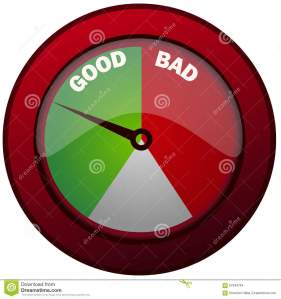
The Attitude Meter
The attitude meter is your ongoing internal awareness of what’s running through your mind at any given moment and evaluating what you think, say and do. It is an essential component for your success and should always be in the “on” position.
You must know your thoughts, attitudes and actions at all times and whether they are good or bad. Good is good and bad is bad. Good thoughts, good attitudes, good behavior or bad thoughts, bad attitudes and bad behavior. Those are the only two choices, but they can’t be both at the same time and they can’t be anything other than good or bad. Even the worst good is still good and the best bad is still bad. And there are no gray areas to choose from or to deceive yourself with. There are only two chooses, good or bad, either this way or that way, one way or the other.
You need to be the first one to know when there is a problem that needs to be fixed. Everybody else already knows it. They can see it, hear it and even predict it. You must always be moving in the right direction and any deviations off course, even the smallest, must be detected by you and corrected immediately.
The job of the meter is to choose the good and filter out the bad, to evaluate and adjust thoughts, attitudes, actions. It alerts you when you’re going in the wrong direction; when good becomes bad. Once you go over to the dark side an immediate “attitude adjustment” must be made.
Relationships
There’s only one rule for relationships and it’s golden.
How should we treat others? How can we make our relationships work; Your relationship with yourself and your relationship with others?
This came from the teachings of Jesus and I first learned it from the King James Version of the Bible, Matthew 7:12, way back in the 1950’s:
“Therefore all things whatsoever ye would that men should do to you, do ye even so to them: for this is the law and of the prophets.”
My simple translation: “Do unto to others as you would have them do unto you”….always, in both words and deeds.
There have been many different ways to say this from a variety of people and religions through the centuries. Some even call it the “Ethic of Reciprocity,” reciprocity meaning to respond “in like manner.”
Confucius, the Chinese teacher and philosopher (551-479 BC) had his own spin on it. “Do not do unto to others what you do not want others to do to you.”
It’s the same thing.
Remember when the “lawyer” trying to test Jesus and asked him, “Teacher, which is the greatest commandment in the Law?” (Matthew 22:36-40)
Jesus said (and I’m paraphrasing) the first of the great commandments is to love the God with all your heart, all you mind, all your soul and all your strength. And the second is like the first, “Love your neighbor as yourself.”
The two greatest commandants in the Law and of the Prophets are about love and relationships The love for God and love for others. These are the essentials of living life as it was intended by the Creator. So that is where we should start and this is perhaps why so many struggle through life because they skip over this..
We know that God “is love.” He is the definition of the word “love.” He loves every person who is living, who has ever lived, and who has yet to live, and he loves us all unconditionally, even when we don’t love Him back. He loved us so much that while we were still sinners he sent his only begotten son (KJV again) to die on the cross for our sins.
So, loving Him back should be a no-brainer. However, the world is full of “no brainers.”
By the way, you can easily see that mankind has had an “attitude problem” for quite some time; since the first sin in the Garden of Eden. This set the tone for all future generations. We would have to change.
So, who are our neighbors? The answer? Everybody, even our families. That’s pretty simple. Love God and love everybody else. The world would be a better place that way, but… sin. By the way, we are all connected by blood anyway and there is only one race… the human race.
Okay, I said it.
The “math” of love is all about addition and multiplication, not subtraction and division.
But the question is, “How do we love others when we don’t even really love ourselves?” “How can we do unto others what we don’t even do unto ourselves?” Those are great questions that need some great answers.
So we’ll start the answer with the Attitude Rule on relationships.
“Treat yourself as you would have others treat you and treat all others the same.”
Simply put, be friendly, kind, polite, respectful and fair to all people, including yourself. Always. Unconditionally.
There are three categories of attitudes that occur in this order: 1) The attitude you have about “yourself.” 2) The attitude you have about “others.” 3) The attitude you have about the “circumstances” of life.
The most important thing to understand is the attitude you have about yourself affects the attitude you will have about everything else; every person, every thing.
What Others Might Say, for example:
“How can I love myself when I grew up in a broken home where my father abused alcohol and other drugs, mentally, emotionally and physically abused my mother and then they divorced when I was in the fourth grade? I had no friends, I was bullied in school, was a high school dropout, had trouble holding a job and struggled through some bad relationships of my own. I have very low self-esteem, I’m a loser, I don’t deserve the good things in life”… and on and on and on. You get the idea.
How can I possibly love myself? The fact is I really “do” treat others as I treat myself. I do love others the way I love myself. Not very much, not very well.
The Bible doesn’t include “self love” in the conversation because it is implied in God’s love for us. God loves you, created you in His image and sent His son to die on the cross in order for your sins to be forgiven and win victory over sin and death. Through His grace and by your faith in Jesus, you are saved and are promised an abundant life here on Earth and for eternity in Heaven. But you must confess with your mouth that Jesus your Savior and the Lord of your life and believe in your heart that God raised Him from the dead. Many, many, too many have not.
We can love others because of God’s love for us. He loved us first. He loved all of us first. He still loves us all of us, even those who don’t love Him in return. He gave us free will. He will not make you love him.
Many people struggle with the “selfs,” self-image, self-esteem, self-worth, self-respect, self-control, self-confidence, self motivation, self-determination, and self-love. Self is not selfish, unless it’s self – God (self minus God or self before God). That is the real problem with “self” stuff. That’s a bad equation.
But all the “selfs” are yours and nobody else’s. They are gifts from God. It is your “self” that makes you different from all others. No one can inflate or deflate your “selfs” except “yourself.” You can have any level of “self-anything” you choose if you back it up with action.
Stop believing all the lies you’ve been told by others who are only trying to deceive you and lead you astray or trying win you over to their way of thinking. Start believing what God says. That’s the only “truth” that will make you free. It doesn’t matter what anybody else thinks or tries to make you think. It only matters what you think. Change your thinking about “yourself” and define who you are by “whose you are” and everything instantly becomes better. Make the real important stuff the most important stuff.
Life is short and the only way you can live life as God intended it to be lived is to actually live it like God intended you to live it. His Grace, your faith, His promises, your obedience, His love for you, your love for Him, your love for yourself through Him, and your love for others, because He first loved us. Let the standard of your actions be evaluated only as “It’s Christ-like or it’s not” and “It pleases God or it doesn’t.”
And life will be good.
You Get What You Give
You get what you give. It’s called a reciprocal response. When you’re nice to someone they will usually be nice to you and vice versa. But you have to give the right stuff. And you must be prepared to respond when others give you what you don’t want. Never reciprocate the bad actions of others.
You can easily avoid conflict by initiating the conversation or interaction. You need beat the other person to the punch. Set the standard. Give it first. Smile first, speak first, extend your hand first, greet them first, say something nice and encouraging first. Stimulate some positive reciprocity. You will be stunned with the results.
Always respond to good with good and to bad with good. When someone gives you a negative, give them back a positive. Instead of killing them (which is a felony), kill ’em with kindness. It’s like heaping burning coals on their heads. Fun stuff.
Here are some other things that might work before you act and react; some “self-talk”: Is it good? Is it right? Does it matter? Is it Christ-like? (it either is or it isn’t). Does it please God? (it either does or it doesn’t). Say to yourself, “This is a good time to work on my patience.” Don’t say it. Don’t do it. Cooler heads prevail. Move on. Go forth and go forth. A soft answer turns away wrath (Proverbs 15:1 has saved my life many times). If you don’t have anything good to say, don’t say anything. Laugh it off. Tone it down. Turn the other cheek. (if that doesn’t work, turn the other two cheeks and run!). Push all the right buttons (reset, delete, volume, mute, etc). Be slow to anger and many more.
You can add many others to the list.
The Math of a Good Life:
Positive and negative have long been used as common modifiers for the word attitude; a “positive” attitude or a “negative” attitude with positive meaning “good” and negative meaning “bad.”
Positive is like in math, symbolized by the “+” sign and meaning add; “to add to.” Negative is symbolized by the “-” sign, meaning subtract, “to take away from.” Think in terms of the positives “adding to the quality of your life” and the negatives as “subtracting from that quality.”
Using this analogy, life is the “sum” of all the positive things you have thought, said, and done and it’s a non-stop, on-going process. The negative things subtract from that sum, leaving the “remainder” which hopefully is still an astronomical number of positives.
Let’s say that each day you start with a clean slate and the math begins with points added for all the positives and points subtracted for all the negatives. An audit of the total would be “eye opening.” Just imagine how many points you could accumulate every time you are considerate, caring, charitable, dependable, encouraging, enthusiastic, fair, faithful, generous, gentle, good, grateful, happy, honest, joyful, kind, loving, nice, optimistic, patient, peaceful, polite, respectful, responsible, trustworthy or unselfish or every time you smile or laugh or hug, not to mention all of the others positive things we could do each day.
Maximize the positives and minimize (and eventually eliminate) the negatives. Make sure the negativity is rare and brief; it doesn’t happen very often and it doesn’t last very long.
And do not reciprocate (DNR) the negativity of others. Make sure the negativity is completely out of your character. Spread joy up to the maximum and bring doom and gloom down to the minimum.
Life should be about adding and multiplying good and not by subtracting and dividing.
The equation for a good life is solved by the enormous number of positive things you think and say and do each and every day, all day long. These good things become the content of your character and are a powerful influence for all those who have the pleasure to be in the realm of your presence.
How many positive points did you accumulate today?
Learn to Push all the Right Buttons
In life, you must learn to push the right “action” buttons; not literally, but figuratively.
- Delete (erase it from your memories). It has “happenE-DUH,” read it in the southern drawl of the great Zig Ziglar). The past is “past” tense. Over. Done.
- Reset (start again; reset to default, your original factory setting; love, joy, peace, patience, kindness, goodness, gentleness, faithfulness and self-control for example.
- Volume (Turn it down; not so loud).
- Tone (Change how you say what you’re saying).
- Mute (Don’t say it! Be positive, be helpful. or be quiet).
- Escape (Do a 180. Turn around and go the other way. Get out of there).
- Shift (Pick up the pace or back away).
- Pause (Think before you say it or do it).
Success Principles
A great attitude is the most important ingredient for success in life. These essential attitudes are required: Discipline, confidence, motivation and determination.
Success is the ongoing accomplishment of goals; personal, professional, big, small, today or long term.
Goals are things you want to be, things you want to do and things you want to have. Zig* said, “You have to be it and do it before you can have it.”
Getting what you want takes specific decisions and specific actions.
If you want this (the goal), then you have to do this (the action) to get this. If you want that, then you have to do that to get that. But if you want this and you do that, you will get that and not this. And if you want that and do this, then, you’ll get this and not that. Get it? Who’s on First? Yes!
Here’s how to get what you want in four steps: (each subsequent step becomes the most important). Tony said, “What changes lives is making decisions and taking actions that produce the results you want.”
- 1) Decide exactly what you want to be, do or have. Be very specific.
- 2) Create a step-by-step game plan to make it happen. Do “these things” to accomplish your goal.
- 3) Put the plan into action. Take the type of action that gives you the best chance to get what you want. Picasso said, “Action is the foundational key for all success.”
- 4) Evaluate consistently and adjust as often as needed until you reach your goal. You can adjust the actions or even the goals along the way, if necessary.
Rinse and repeat.
Formula for success: rise early, work hard, strike oil.
J. Paul Getty
Plug in the Essential Attitudes Each Day
The essential attitudes are the discipline to do things the way they are supposed to be done, the confidence to believe in yourself and know you can do whatever you want to do and need to do, the motivation to really want to do it take action to get it done and the determination to make it happen.
Disciplined, very confident, highly motivated and completely determined.
- Discipline means doing things the way they are supposed to done. It begins with the mastery of your thoughts and attitudes because if you don’t control what you think, you can’t control what you say and do. Discipline is self-control; self-discipline. It’s doing the right things the right way.
- Confidence is knowing you can do what you want to do and what you need to do and whether you believe you can or can’t, you are right. But you always have a 50-50 chance to do anything; you either can or you can’t, will or you won’t, do or you don’t. You must approach everything believing you can, but understand that sometimes you won’t. Perfection is not the goal. Reset your thinking to default and try again. Confidence comes from being prepared, knowing exactly what to do and how to do it. You must rehearse you performance over and over again. Prepare yourself.
- Motivation is the driving force that makes you take action. It means you really, really want to do something; it’s important to you. If you really want to do something, nobody can stop you from doing it and if you really don’t want to do something, nobody can make you do it. External sources can motivate you, but to be completely in your control, motivation must come from within.
- Determination-
It is self-discipline which makes confidence, motivation and determination happen and the sum of all four essential attitudes is mental toughness.
Toughness means controlling your thoughts, attitudes and actions in all circumstances allowing you to perform well and giving you the best chance to be productive and get what you want.
The Eight Laws of Learning
(adapted from the great John Wooden)
Explanation, demonstration, imitation, repetition, repetition, repetition, repetition, repetition. To learn anything, your must listen, read, study, watch, do what you see, and do it over and over and over again.
The goal is to create a correct habit that can be produced instinctively under pressure.
“Repetition is the mother of learning, the father of action, which makes it the architect of accomplishment.”
Zig Ziglar
An Analogy of How to Reach your Goals
Stand on one side of a room and let your goal be to touch a target on the wall. Touching the target symbolizes attaining anything you want to be or do or have.
Take “two steps forward.” This represents taking action, doing the things it takes to get what you want. Now take “one step back.” This represents getting distracted and doing something that takes you further away from you goal.
Now take “two more steps forward,” then “another step back” and then two more forward and one more back. Keep it up until you “reach the target.” Take more than two steps forward, like five or six and you’ll get there quicker.
On the other hand, taking two steps back and one step forward and repeating that over and over takes you further away from your goal. Keep that up and you’ll never get there.
Standing in one place won’t do it either and neither will walking in circles or jumping up and down.
Specific goals and specific actions are required to achieve anything. Taking the right kind of action is the foundational key for success.
Let Your Light Shine
Just like a lighthouse reveals light in the darkness for wandering ships, your face is a beacon that reveals friendliness, kindness and joyfulness for you and me. The look on your face, magnified by the look in your eyes, reveals on the outside, where all can see, what’s going on in the inside; not the specifics, but the general idea. It does not deceive.
So if you’re filled with the blessings of God, let those headlights shine bright and give yourself the “original facelift” with that beautiful smile because it needs to be on constant display. For many it is not. If you are blessed, it needs to be oozing from within.
And one more thing. The physiology produced by smiling with your eyes and your face not only makes others feel good when they see you and perhaps makes them smile as well and even pass that smile on to others, but it also makes you feel better on the inside and gives you another perspective of how things are going in your life in that very moment.
Negative, distressed, distraught and unhappy people don’t smile very often. Even a forced smile would definitely help them lighten up.
The physiology of a great smile on the outside can change what’s going on on the inside.
Let your light shine for all to see.
Contraction Distractions
Can’t, don’t, won’t, ain’t. These are “contraction distractions.” Cannot, do not, will not, am not, be not, have not. The focus must never be on “not.” If you focus on not, not is what you will get.
Keep it up and you’ll find that you’re a prophet.
The brain “muscle” does exactly what it’s told to do. If you pull that muscle, you pull all your other muscles at the same time.
Here’s the success principle: You’re gonna get what you’re looking for, so you might as well look for what you want; what you want to be, to do and to have.
It’s much better than the alternative.
 Rick Clarke's Diary of a Mad Baseball Coach